
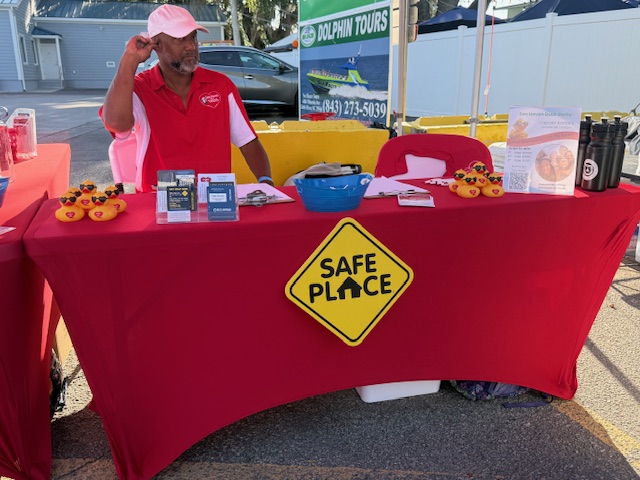
When a nonprofit begins planning a fundraiser, the first question is almost always about ticket sales, duck or entry fees. That is understandable. Ticket revenue is tangible and easy to count. But ask any experienced nonprofit director or event coordinator where the real fundraising power comes from, and the answer is nearly always the same: sponsorships.
Sponsorships are not a bonus revenue stream layered on top of an event. For most nonprofits, they are the financial foundation that determines whether the event breaks even or generates meaningful mission dollars. Understanding that distinction changes how you plan, how you recruit, and how you choose the right fundraiser for your organization.
Sponsorships Do What Ticket Sales Alone Cannot
Ticket and duck sales are transactional. A supporter pays a set amount, receives an entry, and participates on event day. That relationship begins and ends at the point of sale. Sponsorships work differently. A sponsoring business invests in your event in exchange for visibility, community recognition, and an ongoing association with your mission. The relationship extends far beyond a single transaction.
Consider the math. If a nonprofit sells 2,500 duck entries at five dollars each, the gross revenue before expenses is twelve thousand five hundred dollars. A single presenting sponsor at the two thousand five hundred dollar level adds twenty percent to that total with one conversation and one check. Four sponsors at that level double the event revenue entirely. No additional ducks need to be sold, no additional volunteers need to be recruited, and no additional logistics need to be managed.
Sponsorships also provide revenue that arrives before the event, which gives organizations the ability to cover deposits, print materials, and order supplies without waiting for duck sales to accumulate. That cash flow advantage alone is significant for nonprofits operating on tight budgets.
| The nonprofits that consistently generate the strongest fundraiser results are not the ones that sell the most tickets. They are the ones that build the strongest sponsor relationships. |
The Hidden Problem With Traditional Fundraisers and Sponsor Reach
Golf tournaments have funded countless worthy causes over the years. They are proven, respected events with a loyal audience. But walk into any golf tournament fundraiser and look at the sponsor list. You will find financial services companies, law firms, car dealerships, real estate brokerages, and a handful of corporate partners. The sponsor profile is narrow, and it is narrow for a structural reason.
Golf is a sport with a specific demographic. Entry fees are substantial. Participants skew toward higher income brackets. Businesses sponsor events where their customers are. A pediatric dental practice, a children’s clothing boutique, a family restaurant, or a local bakery has little reason to spend money sponsoring a golf tournament because the audience does not reflect their customer base.
The same limitation applies to galas and formal dinner fundraisers. The dress code, the ticket price, and the format send a clear signal about who belongs in the room. Businesses that serve broad, family-oriented, community-wide markets often pass on these events because the fit simply is not there.
Charity runs and 5K events reach a different audience, but they also carry built-in limits. The active, fitness-oriented participant base is enthusiastic, but it still excludes large portions of the community. Sponsor categories naturally cluster around health, wellness, athletic apparel, and sports nutrition.
Why a Rubber Duck Race Reaches Every Sponsor Category
A rubber duck race is a fundamentally different kind of community event. It is accessible, family-friendly, lighthearted, and joyful by nature. There is no participation barrier. You do not need to be athletic, affluent, or belong to any particular demographic to enjoy watching rubber ducks race across the water. That universal appeal is not just a fun detail. It is a strategic sponsorship advantage.
When the audience at an event reflects the entire community, every business in that community has a reason to participate as a sponsor. A hardware store, an insurance agency, a dentist, a pediatrician, a florist, a grocery chain, a children’s clothing store, a bank, a credit union, and a regional restaurant chain all serve families. A rubber duck race serves families. The alignment is immediate and obvious.
This broad sponsor reach also means that nonprofit organizations running rubber duck race fundraisers are not competing for the same narrow pool of corporate sponsors that every golf tournament in the region is already targeting. They are opening conversations with businesses that have never been asked to sponsor a fundraiser because the right event never came along.
| A rubber duck race does not ask sponsors to choose between your event and a golf tournament. It gives them an opportunity they have never had before. |
How the Race A Duck Sponsorship Structure Works
Race A Duck builds a four-tier sponsorship structure into every fundraising platform. Each tier is designed to accommodate businesses of different sizes and budgets, which means no prospect is too small to approach and no opportunity is left on the table.
The sponsorship levels across Race A Duck client events reflect this tiered approach.
Every tier delivers real value. The top levels include logo placement on all signage and collateral, prominent website placement with a link, social media recognition throughout the campaign, free duck entries and banner and booth space on event day. Even the entry-level tier at two hundred fifty dollars delivers a website link and social media recognition, which gives smaller local businesses a genuine return on a modest investment.
Sample Sponsorship Structure
| Sponsorship Level | What the Sponsor Receives |
| Head Ducks
$2,500 |
Logo on all signage and collateral, logo on website with link, 10 social media call outs, 10 free entries, banner placement on event day, booth space |
| Assistant Ducks
$1,000 |
Logo on all signage and collateral, logo on website with link, 4 social media call outs, 3 free entries |
| Hitting Ducks
$500 |
Logo on all signage and collateral, logo on website with link, 2 social media call outs |
| Pitching Ducks
$250 |
Logo on website with link, 1 social media call out |
What This Means for Your Nonprofit
If your organization has been relying on the same fundraising formats year after year and finding that sponsor revenue has plateaued, the format itself may be limiting your reach. A rubber duck race does not replace your existing relationships. It expands the universe of businesses you can approach.
Organizations that have run rubber duck race fundraisers with Race A Duck consistently find that they are able to approach sponsor categories that never engaged with them before. The event format opens the conversation. The mission closes it.
If you are ready to learn more about how Race A Duck works and what a fundraising package includes for your organization, visit raceaduck.com or use the contact form to request a free consultation. There is no obligation and no pressure. Just a conversation about whether this could be the right fit for your community.
Ready to explore what a rubber duck race fundraiser could do for your organization?
Visit raceaduck.com to learn more or request your free consultation.


